The WASPA Code of Conduct Explained for SMS Senders
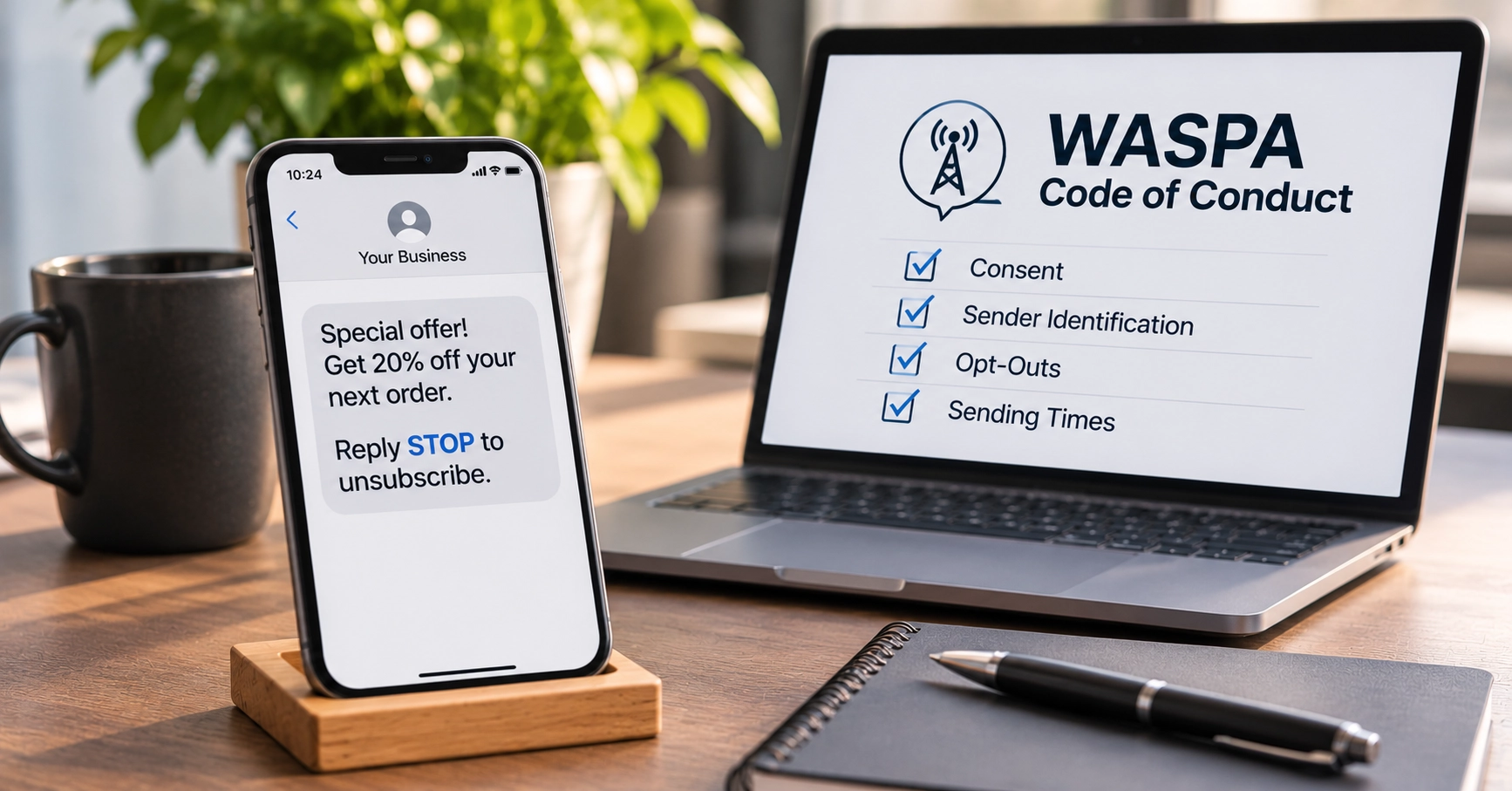
WASPA is the Wireless Application Service Providers’ Association, the industry body whose Code of Conduct sets rules for mobile services and messaging in South Africa. The WASPA Code of Conduct matters to businesses sending SMSes because its requirements can apply to the services they run through a WASPA member, not only to the provider itself.
If your business uses bulk SMS services for promotions or other customer communications, the practical message is straightforward: who you contact, when you contact them, how you identify yourself and how people can opt out all matter.
This guide explains the main requirements in plain language for a South African business or marketer sending SMS campaigns.
What Is the WASPA Code of Conduct?
The WASPA Code of Conduct forms part of an industry self-regulatory framework. According to WASPA, its objectives include ensuring that consumers receive accurate information about mobile services and have a mechanism for raising concerns or complaints.
The Code is directly binding on WASPA members. Importantly for businesses using an SMS provider, it can extend further.
If a member’s client, supplier, affiliate or subcontractor provides or markets a service covered by the Code, the relevant provisions apply to that service as though that party were a member. WASPA members must also ensure that non-member clients providing covered services are aware of and operate consistently with the Code.
That means using a WASPA member does not remove your business’s responsibility for how it uses SMS.
WinSMS is a WASPA member and also publishes its own WinSMS code of conduct for customers using its services.
What Does the WASPA Code of Conduct Say About Consent?
Consent is an important part of the SMS marketing rules South Africa businesses need to consider.
The current Code defines consent as a voluntary, specific and informed expression giving permission for personal information to be processed.
For direct marketing, the Code permits marketing to someone who has given consent. It also provides for marketing in a particular existing-customer situation. This applies where the person supplied their contact details during a sale, the business is marketing its own similar products or services, and the person was given a reasonable, free and uncomplicated opportunity to object both when their details were collected and with each subsequent marketing communication.
The Code also says a business must not continue sending direct marketing to someone who has opted out, unless that person has expressly requested or agreed otherwise. It similarly addresses pre-emptive blocks registered with the National Consumer Commission or WASPA.
Businesses should therefore be able to establish why each person on a marketing database may receive the communication.
The Code goes further: if a recipient asks where their contact details came from, the member must identify the source within a reasonable period and provide evidence supporting the basis on which that marketing was sent.
Does a Marketing SMS Have to Identify the Sender?
Yes.
A direct marketing communication must identify the sender, or the person on whose behalf it was sent. It must also provide an address or other contact details that the recipient can use to request that the communications stop.
In practical terms, a recipient should not receive a promotional SMS and be left wondering which business sent it.
This requirement is worth considering when drafting SMS copy. Character limits encourage short messages, but shortening a message should not come at the expense of required information.
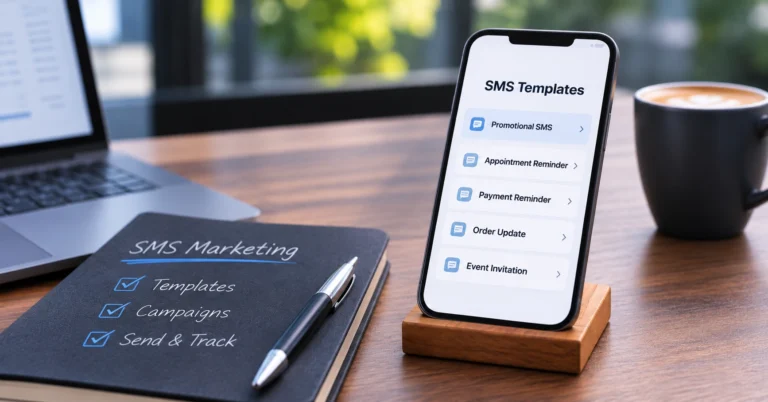
For ready-to-use examples that include the business name and opt-out wording, see our SMS marketing templates.
The same considerations apply regardless of how your organisation sends its messages, including services such as Email to SMS.
What Are the WASPA Rules for SMS Opt-Outs?
Businesses conducting direct marketing need a procedure for receiving and processing requests from people who no longer want marketing communications.
For SMS specifically, the Code says that where technically feasible, recipients must be able to opt out of further direct marketing by replying STOP. If that is not technically feasible, clear opt-out instructions must appear in each marketing message.
The Code also recognises END, CANCEL, UNSUBSCRIBE and QUIT in place of STOP. Different capitalisation of the opt-out term must not prevent the request from working.
Once someone opts out, a confirmation must be sent identifying the marketing they have opted out of, and the consumer must not be charged for that confirmation.
For businesses that need customers to reply to messages, WinSMS also provides two-way SMS with short and long codes.
You can read more about managing an SMS opt-out facility on the WinSMS blog.
When Are Businesses Allowed to Send Marketing SMSes?
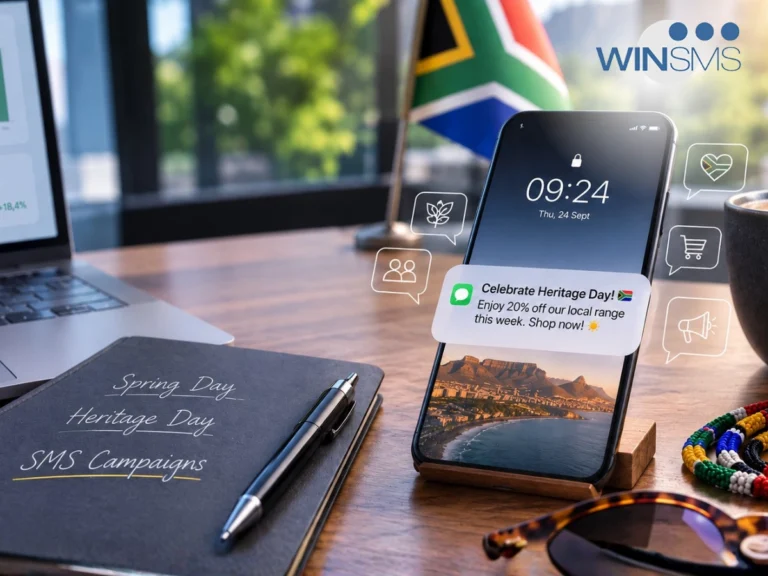
The current WASPA Code specifies times when direct marketing is not permitted unless the consumer has expressly or implicitly requested or agreed otherwise.
Direct marketing may not be sent:
- on Sundays or public holidays
- on Saturdays before 09:00 or after 13:00
- on other days between 20:00 and 08:00 the following day.
These restrictions apply specifically to direct marketing. Businesses should therefore distinguish marketing campaigns from other forms of customer communication rather than treating every SMS as the same type of message.
How Does WASPA Fit With POPIA, the CPA and the National Opt-Out Registry?
The WASPA Code does not replace South African law. The Code itself requires members to conduct themselves lawfully. Its direct marketing provisions also use concepts that interact with the broader regulatory environment.
For businesses, this means WASPA compliance should not be treated as the only requirement that applies to an SMS campaign.
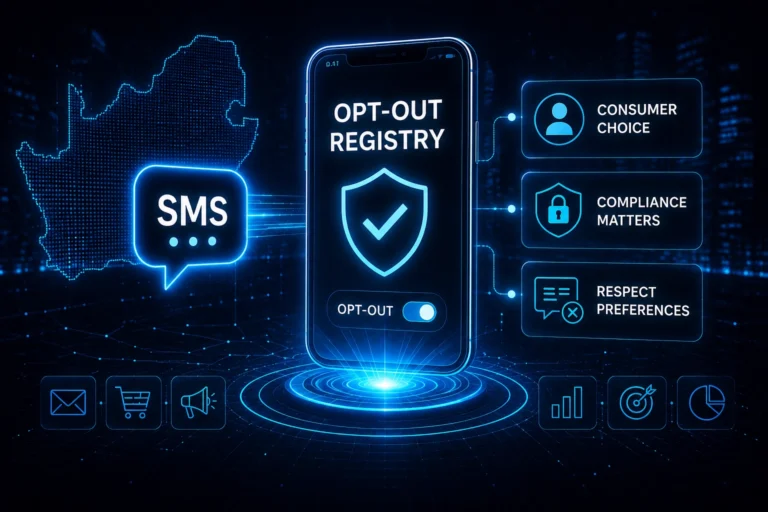
The Code specifically recognises a pre-emptive block registered with a registry established by the National Consumer Commission. Unless the person has expressly requested or agreed otherwise, direct marketing must not be delivered to someone covered by such a block. It separately recognises WASPA’s own Do Not Contact registry.
For more detail on this part of the compliance landscape, read our guide to the South African direct marketing opt-out registry.
POPIA, the Consumer Protection Act and the WASPA Code should therefore be considered alongside one another when assessing a business’s direct marketing practices.
What Happens if Someone Complains About an SMS?
WASPA provides processes through which consumers can report SMS spam or lodge a complaint about an alleged breach of its Code.
Most complaints are initially handled through an informal process. WASPA says the member is given an opportunity, and five days, to resolve the matter directly with the complainant.
Complaints involving serious breaches or affecting many consumers can proceed through a formal process in which evidence is considered by an independent adjudicator.
The Code also requires members to provide WASPA with information relevant to services under complaint. This can include customer communications and records of service termination requests.
Where a member is found to have breached the Code, available sanctions range from requiring the breach to be remedied through to fines, suspension or expulsion. A member can also be required to suspend or terminate the services of a client operating contrary to the Code.
For a business using a WASPA member to send SMS campaigns, that is another reason to maintain appropriate records of consent, contact sources and opt-outs.
How Can You Check Whether an SMS Provider Is a WASPA Member?
WASPA maintains a current member directory on its website. You can use its complete member list or member search rather than relying only on a provider’s own claim of membership.
Check the WASPA member directory
Membership is relevant because the Code is binding on WASPA members, and WASPA provides a formal complaints framework for services supplied through them.
WASPA SMS Compliance Checklist
Before sending a direct marketing SMS campaign, check that:
- You have an appropriate basis under the Code for contacting each recipient.
- You can establish where the recipient’s contact details came from.
- Your SMS clearly identifies the sender.
- The recipient has a way to request that marketing stops.
- SMS recipients can reply STOP where technically feasible, or are given clear alternative opt-out instructions.
- Previous opt-out requests and applicable pre-emptive blocks are respected.
- Your campaign is scheduled within the permitted direct marketing times unless the consumer has requested or agreed otherwise.
- Your records are sufficient to respond if a recipient questions why they received the message.
Check your campaign before you send it
Run your message through the free WinSMS Campaign Advisor. It checks your SMS against WASPA and POPIA requirements and shows you what to fix before your campaign goes out.
Frequently Asked Questions
What is WASPA?
WASPA is the Wireless Application Service Providers’ Association. It represents mobile application service providers operating in South Africa and maintains a Code of Conduct as part of an industry self-regulatory framework. The Code sets requirements for WASPA members and services provided through them.
Can a business send marketing SMSes to existing customers?
The Code provides for direct marketing where a customer supplied their details during a sale, the business markets its own similar products or services, and the customer received appropriate opportunities to object. Consent is another basis provided for by the Code.
Does every marketing SMS need an opt-out?
For SMS direct marketing, the recipient must be able to opt out by replying STOP where technically feasible. If that is not technically feasible, clear instructions for opting out must be included in each marketing message.
What times can marketing SMSes be sent?
Unless the consumer has requested or agreed otherwise, the WASPA Code prohibits direct marketing on Sundays and public holidays, on Saturdays before 09:00 and after 13:00, and on other days between 20:00 and 08:00 the following day.
Choose a Bulk SMS Provider You Can Trust
Not all Bulk SMS providers are created equal. WinSMS has helped South African businesses communicate reliably for over 20 years with transparent pricing, no expiry on credits, local support, powerful SMS APIs, and flexible messaging solutions designed to scale with your business.
Sign Up for a Free TrialNo contracts • No expiry • Local SA support
Supported Networks: Vodacom · MTN · Cell C · Telkom Mobile