How to Plan an SMS Marketing Campaign That Converts
SMS remains one of the most effective marketing channels available to businesses today. While inboxes are overflowing and social media algorithms constantly change, SMS continues to provide an almost immediate connection with customers. Most text messages are opened within minutes, making SMS an ideal channel for promotions, announcements, reminders and time-sensitive offers.
However, successful SMS marketing isn’t simply about sending thousands of messages at once. The most effective campaigns are carefully planned around business goals, customer needs and relevant messaging.
In this guide, we’ll walk through the key steps involved in planning an SMS marketing campaign that delivers meaningful results, while highlighting the common mistakes businesses should avoid.
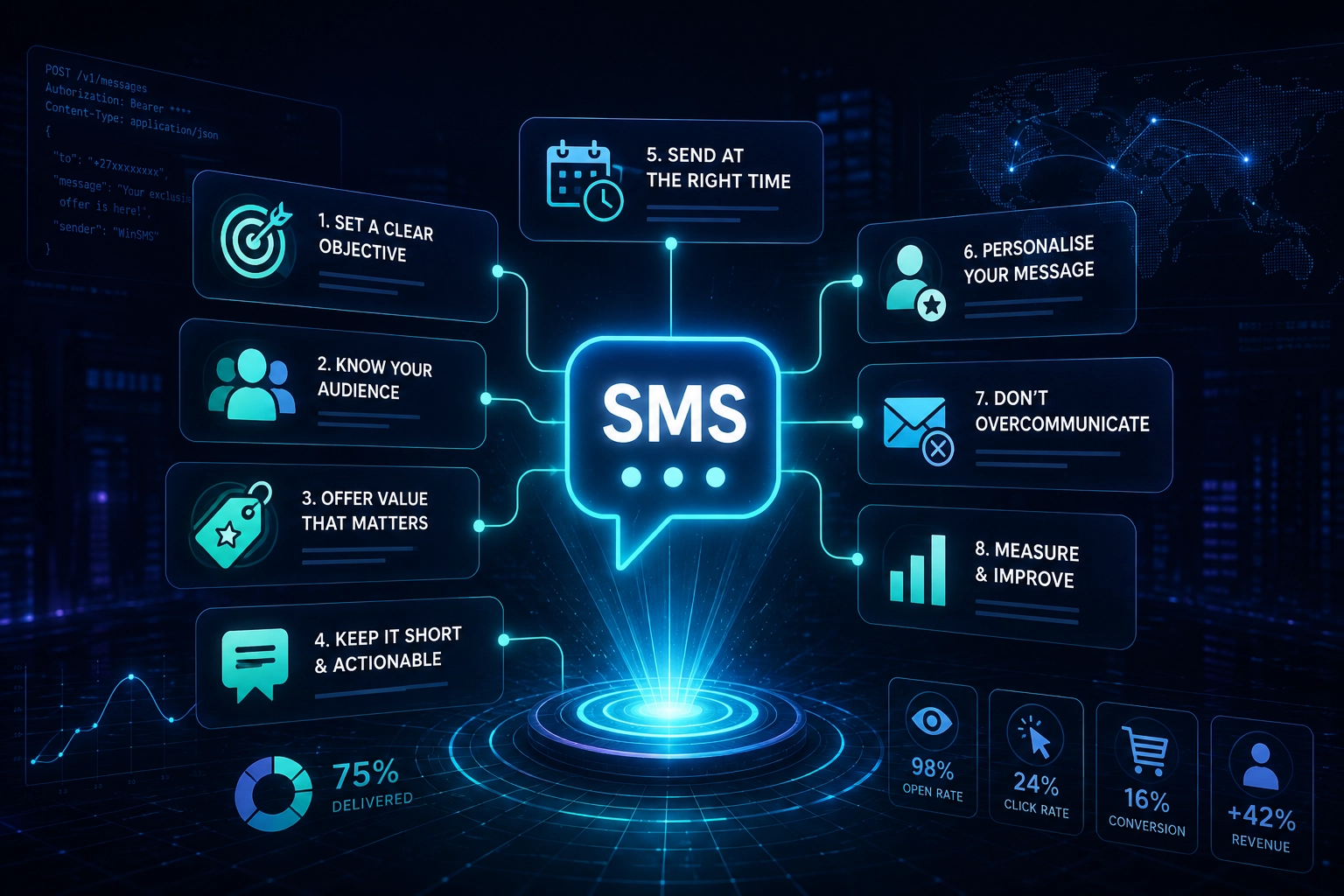
Start With a Clear Objective
Before writing a single message, define exactly what you want your campaign to achieve.
Businesses often make the mistake of sending promotional SMS messages simply because they have a customer database. Without a clear objective, it’s difficult to measure success or determine whether the campaign delivered a return on investment.
Common campaign objectives include:
- Promoting a limited-time sale
- Driving traffic to a website
- Encouraging customers to visit a physical store
- Launching a new product or service
- Increasing bookings or appointments
- Rewarding loyal customers
- Generating registrations for an event or webinar
Each objective should have a measurable outcome. For example, rather than aiming to “increase sales”, define a target such as increasing online purchases by 15% during a weekend promotion.
Know Who You’re Sending To
One of the biggest advantages of SMS marketing is that it allows businesses to communicate directly with customers. However, not every customer should receive the same message.
Segmenting your audience ensures that each campaign remains relevant to the people receiving it.
Useful audience segments may include:
- Existing customers
- New customers
- Loyalty programme members
- Customers who haven’t purchased recently
- Customers in a specific geographic area
- Customers interested in a particular product or service
The more relevant the message, the more likely customers are to engage with it.
Offer Something That Creates Immediate Value
Customers receive countless marketing messages every week. Your SMS should immediately answer one question:
“Why should I care?”
Strong SMS campaigns usually include an offer that creates urgency or provides genuine value.
Examples include:
- Exclusive discounts
- Early access to promotions
- Limited stock notifications
- Flash sales
- VIP offers
- Event invitations
- Free delivery promotions
Avoid sending messages that simply announce your business exists. Every campaign should provide a clear reason for customers to take action.
Keep Your Message Short and Actionable
SMS gives you limited space to make an impression.
The most effective messages are concise, easy to understand and focused on a single action.
Instead of trying to communicate multiple offers or include unnecessary information, focus on one clear message.
For example:
Winter Sale! Save 25% on selected products until Sunday. Shop now: [Link]
This message quickly communicates the offer, creates urgency and provides a clear next step.
Include One Clear Call-to-Action
Every SMS campaign should encourage recipients to take one specific action.
Examples include:
- Shop Now
- Book Today
- Redeem Your Voucher
- Learn More
- Confirm Your Booking
- Register Now
- Call Today
Avoid including multiple links or asking customers to make several decisions within one message. A single, focused call-to-action generally performs better.
Timing Can Make or Break Your Campaign
Even the best-written SMS may underperform if it’s sent at the wrong time.
Consider when your audience is most likely to engage with your message.
For example:
| Campaign Type | Recommended Timing |
|---|---|
| Retail promotions | Thursday afternoon or Friday morning |
| Restaurant specials | Before lunch or late afternoon |
| Event reminders | 24–48 hours before the event |
| Appointment reminders | One day before the appointment |
| Product launches | During business hours |
Avoid sending promotional SMS messages early in the morning, late at night or during public holidays unless the communication is genuinely time-sensitive.
Personalisation Improves Engagement
Customers are more likely to respond when a message feels relevant to them.
Personalisation doesn’t need to be complicated.
Simple examples include:
- First name
- Branch location
- Loyalty tier
- Previous purchases
- Membership status
For example:
Hi Sarah, your exclusive VIP winter offer is waiting. Redeem before Sunday: [Link]
Small touches like these can significantly improve engagement.
Don’t Overcommunicate
SMS is one of the most personal communication channels available.
Sending too many promotional messages can quickly result in customer fatigue and increased opt-outs.
Instead of focusing on quantity, prioritise sending messages that customers genuinely find useful.
Businesses should establish a consistent communication schedule that balances marketing opportunities with customer experience.
Measure the Success of Every Campaign
Planning doesn’t end once the SMS has been sent.
Reviewing campaign performance helps improve future marketing efforts.
Important metrics include:
- Delivery rate
- Click-through rate
- Conversion rate
- Revenue generated
- Customer responses
- Opt-out rate
Analysing these metrics provides valuable insight into what resonates with your audience.
Common SMS Marketing Mistakes to Avoid
Even experienced marketers can make mistakes that reduce campaign performance.
Some of the most common include:
Sending the Same Message to Everyone
Different audiences have different needs. Segmentation improves relevance and results.
Writing Messages That Are Too Long
Customers should understand your message within seconds.
Forgetting the Call-to-Action
If recipients don’t know what to do next, they’re unlikely to take action.
Sending Messages Too Frequently
Respect your customers’ attention by communicating only when you have something valuable to share.
Ignoring Campaign Performance
Reviewing results after each campaign helps refine future messaging and improve ROI.
When Should Businesses Use SMS Marketing?
SMS marketing works particularly well for:
- Retail promotions
- Ecommerce campaigns
- Hospitality offers
- Healthcare reminders
- Financial service updates
- Event marketing
- Loyalty programmes
- Seasonal promotions
Businesses that integrate SMS into their broader marketing strategy often benefit from faster customer engagement and stronger response rates.
Final Thoughts
A successful SMS marketing campaign starts long before the first message is sent. By defining clear objectives, understanding your audience, creating valuable offers and measuring campaign performance, businesses can turn SMS into a highly effective marketing channel.
Rather than focusing solely on sending messages at scale, businesses should prioritise relevance, timing and customer value. This approach not only improves engagement but also helps build stronger, longer-lasting customer relationships.
If you’re looking to streamline your campaigns, a reliable Bulk SMS platform with features such as scheduling, personalisation, reporting and automation can help you execute your strategy more efficiently.
Frequently Asked Questions
What makes an SMS marketing campaign successful?
A successful SMS marketing campaign starts with a clear objective, targets the right audience, provides value to recipients and includes a strong call-to-action. Measuring campaign performance after sending also helps improve future results.
How often should businesses send marketing SMS messages?
There is no universal rule, but businesses should avoid sending promotional SMS messages too frequently. Messages should be relevant, timely and provide genuine value to customers.
What is the ideal length for an SMS marketing message?
SMS messages should be concise and easy to understand. Focus on one offer or announcement and include a single call-to-action.
Should SMS marketing be personalised?
Yes. Personalising SMS messages using customer names, locations or previous interactions can improve engagement and make campaigns feel more relevant.
Choose a Bulk SMS Provider You Can Trust
Not all Bulk SMS providers are created equal. WinSMS has helped South African businesses communicate reliably for over 20 years with transparent pricing, no expiry on credits, local support, powerful SMS APIs, and flexible messaging solutions designed to scale with your business.
Sign Up for a Free Trial Use Our WinSMS Campaign AdvisorNo contracts • No expiry • Local SA support
Supported Networks: Vodacom · MTN · Cell C · Telkom Mobile